
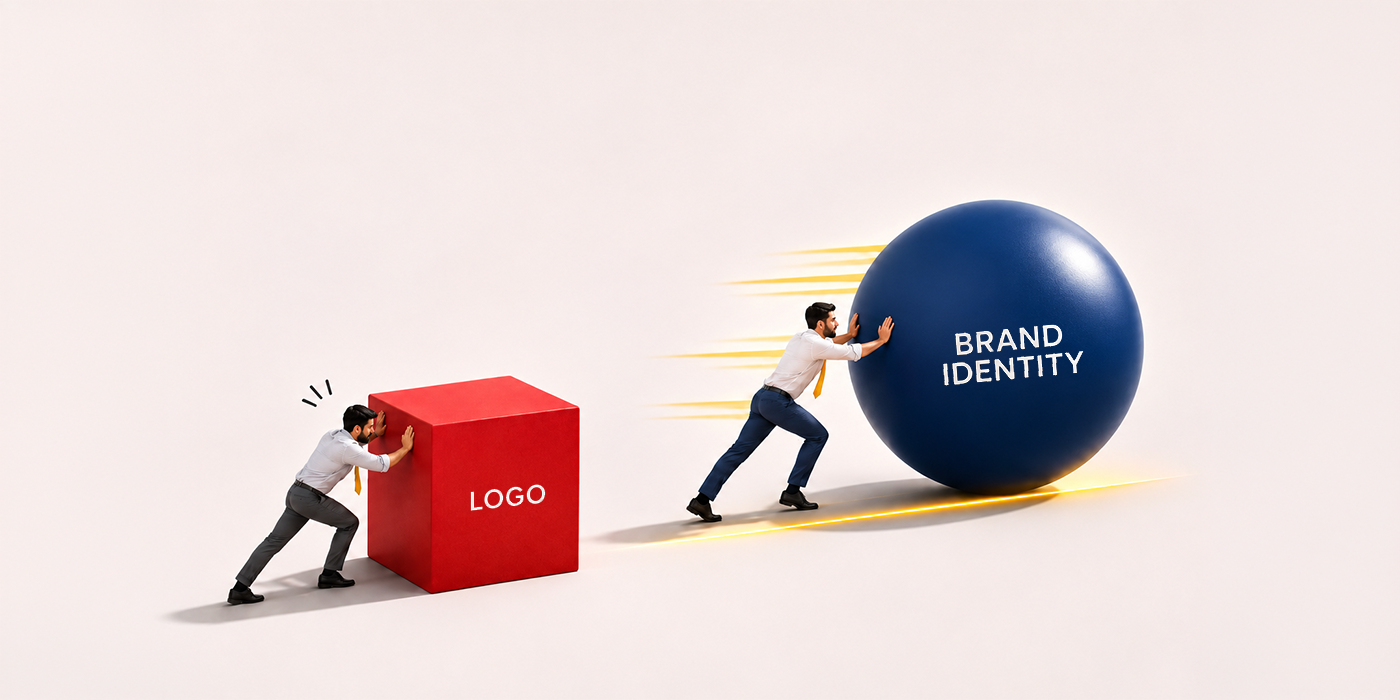
Ever noticed the smile hidden in Amazon’s logo? Or how instantly recognisable Britannia’s logo is?
You probably remember hundreds of logos without even trying. Sometimes, a familiar colour, symbol, or shape is enough to recognise a brand before reading its name.
Funny how that works, right?
Your brain learns to recognise brands through repeated experiences. And that’s exactly why strong branding matters.
Your logo is logo-ing. But is your brand branding?
A great logo is a good start. But building a memorable brand takes a lot more than that.
1. Logo vs Brand Identity: What’s the Difference?
Let’s keep it simple. A logo is a visual symbol representing your business. It helps people identify and recognise your brand.
Brand identity is the complete personality of your business, expressed through colours, typography, packaging, messaging, and overall visual communication.
Think of it this way:
Your logo is your profile picture. Your brand identity is your entire personality.
A logo makes your business recognisable. A strong brand identity makes it memorable.
2. Why Isn’t a Good Logo Enough?
Imagine a premium jewellery brand with an elegant logo but inconsistent packaging, outdated website designs, and completely different social media visuals.
Doesn’t feel very premium anymore, does it?
Now imagine everything working together, from the logo to the packaging and website. Every detail communicates the same personality. That’s the difference!
Even a beautifully designed logo can lose its impact when the rest of the branding doesn’t match. Top 10 Branding Mistakes That Are Killing Your Growth
3. What Makes a Strong Brand Identity?
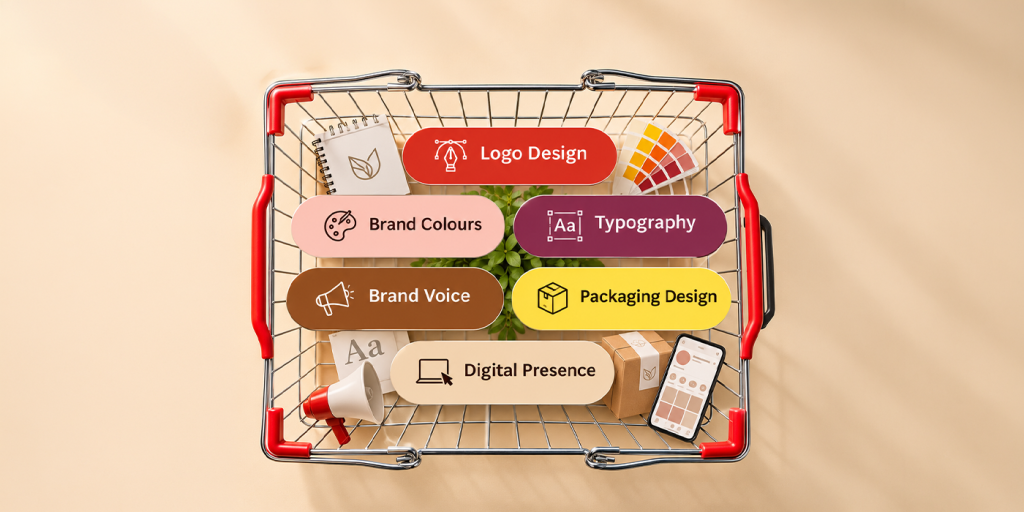
A memorable brand identity combines multiple elements:
- Logo Design: A distinctive symbol that represents your business.
- Brand Colours: A consistent palette that reflects your brand personality.
- Typography: Fonts that communicate the right tone and style.
- Brand Voice: Messaging that sounds consistent across platforms.
- Packaging Design: Product presentation that reinforces brand recognition.
- Digital Presence: Websites, social media, and advertisements that follow one visual identity.
When these elements work together, your business develops a personality customers can recognise across different touchpoints.
4. Why Does Brand Identity Matter for Business Growth?
Branding isn’t just about looking good. It’s about how people perceive your business.
First Impressions Matter: Professional branding helps communicate credibility before customers even interact with your products.
Recognition Builds Familiarity: Consistent visuals make it easier for customers to recognise your business over time.
Consistency Builds Trust: A connected brand experience across packaging, websites, and social media helps create a dependable impression.
Differentiation Matters: A distinctive identity helps your business stand apart from competitors.
Marketing Becomes More Consistent: Strong branding gives every campaign, advertisement, and social media post a recognisable visual direction. Which Storytelling Format Wins in 2025?
5. Is It Time to Upgrade Your Brand Identity?
Ask yourself a few questions.
Does your logo reflect your business? Do your website and social media look connected? Can customers recognise your brand without seeing its name?
If the answers are mostly no, your branding might need some attention.
But here’s the thing. Rebranding doesn’t always mean redesigning your logo.
Sometimes, improving your colours, messaging, packaging, or overall design consistency can make a meaningful difference.

6. Give Your Brand an Identity Worth Remembering
At Infinite Media, we believe branding should do more than make a business look attractive.
As a creative branding agency in Chennai, we bring together brand strategy, logo design, visual identity, packaging, and creative storytelling to help businesses build identities that stand out.
Because a good logo gets noticed. But a strong brand identity gives people a reason to remember.
Ready to build a brand that speaks for itself?
Let’s give your business an identity worth remembering.